Blog

Illustration showing a cloud-based infrastructure platform with the text "60% Faster AWS Kubernetes Deployments" above a futuristic cloud computing graphic, surrounded by connected digital nodes and data cubes on a clean white background.

How to Cut AWS Kubernetes Deployment Time by 60% Without Sacrificing Reliability

The Deployment Bottleneck Nobody Talks About You've containerized your app. You've migrated to EKS. You've done everything the cloud-native playbook says. And yet your deployments still take 12, 15, sometimes 20 minutes. Your engineering team is burning time staring at kubectl rollout status, your on-call engineers are anxious every release night, and your CI/CD pipeline feels more like a CI/CD…

Read More icon
Banner featuring the text "From Code to Cloud. Simplified DevOps." above an image of a professional working on a tablet with digital DevOps icons, workflow elements, and an infinity loop symbol representing continuous integration and deployment in a cloud-based environment.

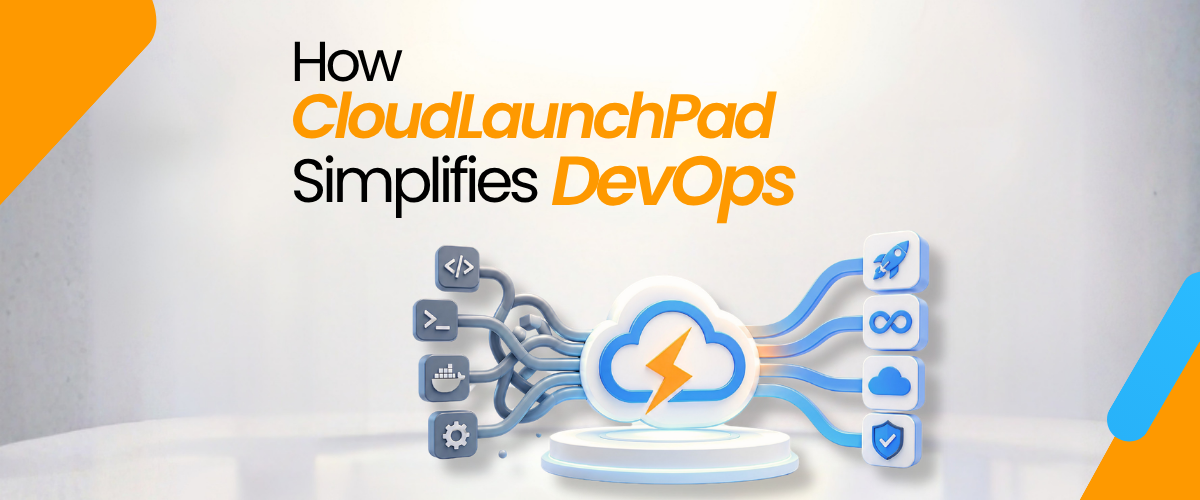
From Code to Cloud in Minutes: How I Simplified DevOps with CloudLaunchpad

The part nobody tells you about building apps... Writing code is fun.You design APIs, build features, fix bugs, and finally—everything works perfectly on your local machine. That moment feels great. And then someone asks: “When can we deploy this to production?” That’s where things start getting… complicated. Why Application Deployment Isn't Actually Simple At first, deployment sounds easy. You’ve built…

Read More icon
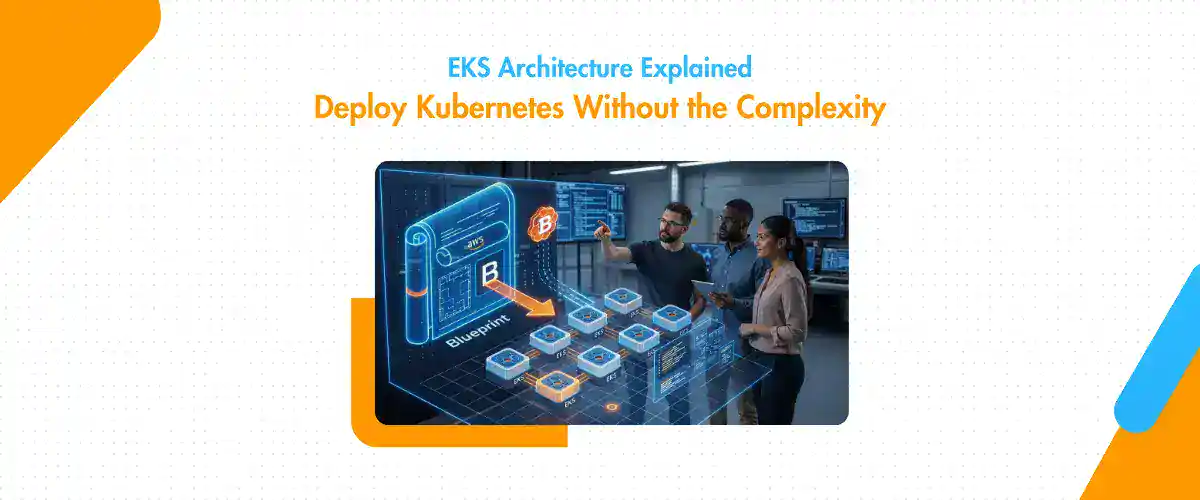
Graphic titled "EKS Architecture Explained – Deploy Kubernetes Without the Complexity" featuring a team of IT professionals reviewing a digital AWS EKS deployment blueprint with interconnected Kubernetes nodes, cloud infrastructure components, and workflow visualizations in a modern technology workspace.

AWS EKS Architecture Explained – What Every DevOps Lead Should Know

Introduction K8s has become the backbone of modern cloud-native infrastructure, and Amazon Elastic Kubernetes Service (EKS) is the leading managed Kubernetes platform on AWS. Yet many DevOps leads find EKS intimidating — not because it lacks capability, but because its architecture spans multiple layers that must all work together seamlessly. This blog breaks down EKS architecture clearly, identifies the key…

Read More icon
Illustration with the text "Fast Doesn't Have to Be Fragile – Speed without compromising security or stability" alongside a person working on a laptop, featuring security and speed icons that represent secure, reliable, and efficient software deployment and DevOps workflows.

How to Reduce Deployment Time Without Breaking Security or Stability

In today’s fast-moving tech world, speed is no longer a luxury — it’s an expectation. Product teams want new features rolled out almost as soon as they’re imagined. Business teams are under pressure to reach the market faster than competitors.Customers expect constant improvements, smoother experiences, and absolutely zero downtime. In the middle of all this sits the DevOps team —…

Read More icon
Illustration titled "Standardization in DevOps Automation" showing a developer working on a laptop with code, DevOps workflow elements, programming symbols, and security icons, representing streamlined, standardized, and automated software development and deployment processes.

The Missing Layer in DevOps Automation: Why Standardization Matters and How Modern DevOps AutomationPlatforms Enable It

Scaling Beyond the Bottleneck: Why DevOps Automation Fails Without Standardization In the modern enterprise, DevOps Automation has evolved from a specialized function into a daily dependency for developers, testers, and product teams alike. Automation is widely promoted as the foundation of speed, reliability, and scale. Yet in practice, many organizations find themselves moving faster in some areas while remaining blocked…

Read More icon
Graphic comparing CloudLaunchPad vs Manual DevOps with the headline "Why Automation is the Future", featuring futuristic gear icons and automation elements that symbolize streamlined DevOps workflows, infrastructure automation, and improved operational efficiency.

CloudLaunchPad vs Manual DevOps: Why Automation Is the Future of Modern Development

Introduction: Why DevOps Needs a Rethink A few years ago, DevOps was considered a specialized skill set handled by a small group of experts. Today, DevOps is no longer just a role - it’s a daily dependency for developers, testers, product managers, and even business teams. Every feature release, bug fix, or configuration change depends on how smoothly infrastructure and…

Read More icon
Graphic featuring the message "Secure your pipeline before it secures you." alongside a DevOps infinity loop with a security shield and lock icon at the center, symbolizing DevSecOps practices, secure CI/CD pipelines, and proactive security integration throughout the software development lifecycle.

How CloudLaunchPad Automates Security in Modern DevOps Pipelines

In today’s cloud automation world, DevOps teams are under constant pressure to deliver faster, more frequently, and at scale without compromising on security. As deployments grow more complex and distributed across microservices, Kubernetes clusters, and multi-cloud environments, the traditional approach to manual compliance checks simply cannot keep up. This is where CloudLaunchPad becomes a game-changer. CloudLaunchPad is more than just…

Read More icon
DevOps automation

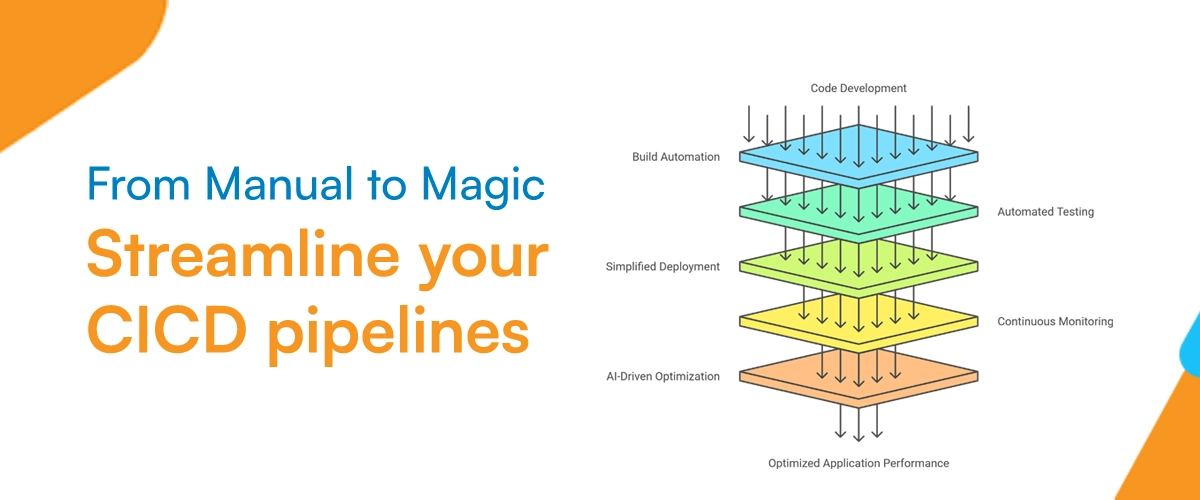
From Manual to Magic: Streamlining CI/CD Pipelines with CloudLaunchPad

In today’s fast-paced DevOps ecosystem, automation is no longer a luxury — it’s the foundation for speed, scalability, and reliability. Continuous Integration and Continuous Deployment (CI/CD) pipelines play a vital role in accelerating software delivery, yet many organizations still struggle with inefficiencies, manual tasks, and inconsistent environments. This is where CloudLaunchPad turns the manual into magical — transforming complex, repetitive…

Read More icon
Automating multi-environment deployments with CloudLaunchPad Blog

Scaling DevOps with CloudLaunchPad: How Automation Simplifies Multi-Environment Deployments

If you’ve ever managed software deployments across multiple environments—development, staging, production—you know how messy things can get. Teams often end up firefighting environment drift, chasing down configuration mismatches, and losing precious time fixing issues that shouldn’t have happened in the first place. This is where CloudLaunchPad makes a difference. It’s designed to take the complexity out of DevOps by automating…

Read More icon
Promotional banner announcing "CloudLaunchPad just got bigger: EC2 Deployments are live!" featuring cloud and AWS infrastructure icons on a presentation screen, while a group of professionals celebrates and applauds the launch of the new EC2 deployment capability.

Now on EC2: CloudLaunchPad takes deployments to the next level!

We’re super excited to share some big news—CloudLaunchPad can now launch applications not only on Kubernetes (EKS) but also on Amazon EC2! Until now, CloudLaunchPad has made it ridiculously easy to take your code from a GitHub repo, connect it with ECR, and have it live on Kubernetes in just a few clicks. That was already a game-changer. But now,…

Read More icon
1 2